
Rain boots and city pavements have a complicated relationship. The right pair gets you from the front door to your desk dry, comfortable and reasonably put together. The wrong pair turns a fifteen-minute walk into a wrestle with blisters, sweaty feet and a trouser leg full of puddle water. The difference is rarely the label on the boot. It is tread depth, fit, socks and what you carry in your bag.
Start With a Style That Reads Office-Friendly
Rubber can look smart or it can look like a festival. The deciding factors are finish, height and profile.
A matte finish reads dressier than high gloss. Black, charcoal, deep navy, dark olive and burgundy sit comfortably with most work wardrobes, while bright trims, contrast sole stripes and large logos pull a boot firmly into casual territory. Look for clean lines, a neat toe shape and an elastic side gore rather than buckles and straps.
Height matters as much as colour. Ankle or Chelsea-height boots in a slim profile look closest to ordinary shoes and slip under tailored trousers or cuffed jeans. Knee-high boots work well under wide-leg trousers and midi skirts, but a bulky knee-high with a chunky lug sole will fight every outfit you own.
Details that quietly matter
- A low, dense sole rather than a deep hiking tread — easier to style, still grippy.
- No visible branding on the front or heel.
- A shaft wide enough to tuck trousers into on the wettest days, narrow enough to look deliberate.
Grip: What to Check Before You Buy
Wet pavement, polished station floors, marble lobby tiles, painted crossing lines, metal drain covers and escalator steps are all slippery in the rain, and a smooth-soled fashion boot will slide on every one of them. Grip is the one feature worth paying for.
Turn the boot over. You want a tread with reasonably deep, widely spaced lugs and fine cuts — called sipes — across them. Press a thumbnail into the rubber; it should give slightly. Very hard rubber compounds stiffen further in cold weather and lose their bite on wet surfaces, which is exactly when you need them. If the heel is worn flat or the tread has gone smooth, that pair has finished its commuting career.
Technique helps too. Take shorter steps than usual, keep your weight over your feet instead of stretching ahead, hold the handrail on stairs, and walk around the shiny patches rather than across them. On a wet painted crossing or a smooth station concourse, almost no sole grips well, so slow down for those few metres.
Fit, Socks and Insoles: Comfort Over Real Distance
Rubber does not stretch or soften the way leather does, so sizing matters more than with ordinary shoes. You want roughly a finger's width of space at the toe, and a heel that stays put. Half a size up is often right if you plan to wear thick socks; too much room and your heel will lift with every step, which is how blisters start.
Socks do more work than most people expect. Cotton holds moisture against the skin and stays damp for hours. Wool or a wool-and-synthetic blend wicks it away and keeps its cushioning even when wet. A thin liner sock under a thicker one is a well-worn trick for long walks.
Check the insole that comes with the boot. Many are flat foam slabs with no support. If yours are, replace them with an insole that has some arch support and a little cushioning under the heel — it changes how a mile feels. Before your first real commute, wear the boots indoors for an afternoon so you find any rubbing at the ankle or instep while you can still return them.
If you regularly finish the day with aching feet or blisters that will not heal, it is worth talking to a podiatrist rather than pushing through it.
Carry a Spare Pair — and Spare Socks
A waterproof boot keeps rain out and, unfortunately, keeps sweat in. Arriving with damp feet and then sitting in rubber for eight hours is the fastest route to cold toes and a long, uncomfortable day.
The simplest fix is a second pair of shoes: lightweight flats, thin leather loafers or a pair you leave permanently under your desk. If you would rather not leave anything at work, foldable flats take up almost no space in a tote. Pack them in a thin drawstring bag so they stay clean, and add a spare pair of socks in a small zip pouch. If you wear tights, a spare pair weighs nothing and has rescued many a morning.
Treat the boots as the vehicle and the shoes as the destination. The commute gets the rubber; the office gets the leather.
Dry Them Properly, or They Will Let You Down
How you store wet boots decides how long they last. At the office, stand them on a small tray or inside a plastic bag under your desk rather than shoving them into a closed locker, where damp air sits and turns stale.
At home, pull the insoles out, stuff the boots loosely with newspaper or a boot shaper, and leave them upright at room temperature, away from radiators, underfloor heating and direct sun. Heat dries rubber unevenly and makes it brittle, and it will crack at the flex points within a season or two. Never put rubber boots in a tumble dryer.
Give each pair a full day to dry before wearing it again, which is one good argument for owning two. Wipe mud off with cool water and a cloth; strong solvents and detergents strip the finish. If a pair starts to smell, a light sprinkle of bicarbonate of soda left overnight, then shaken out, is usually enough.
Build a Small Commute Kit and Stop Thinking About the Weather
Once the pieces are in place, rainy mornings stop being a decision. Keep the following together in the bag you use most, and you can leave the house in any weather without a second thought.
- Ankle-height rain boots with a matte finish and a real tread
- A spare pair of shoes, foldable or left at your desk
- One pair of wool socks in a zip pouch
- A thin plastic bag or boot tray for wet storage
- A compact umbrella that lives in the bag, not on the rack
Replace anything the moment it stops working: worn soles, stretched elastics, socks that have gone thin at the heel. A commute kit is only useful if you trust every item in it, and boots that grip, fit and dry properly will quietly do their job for years.
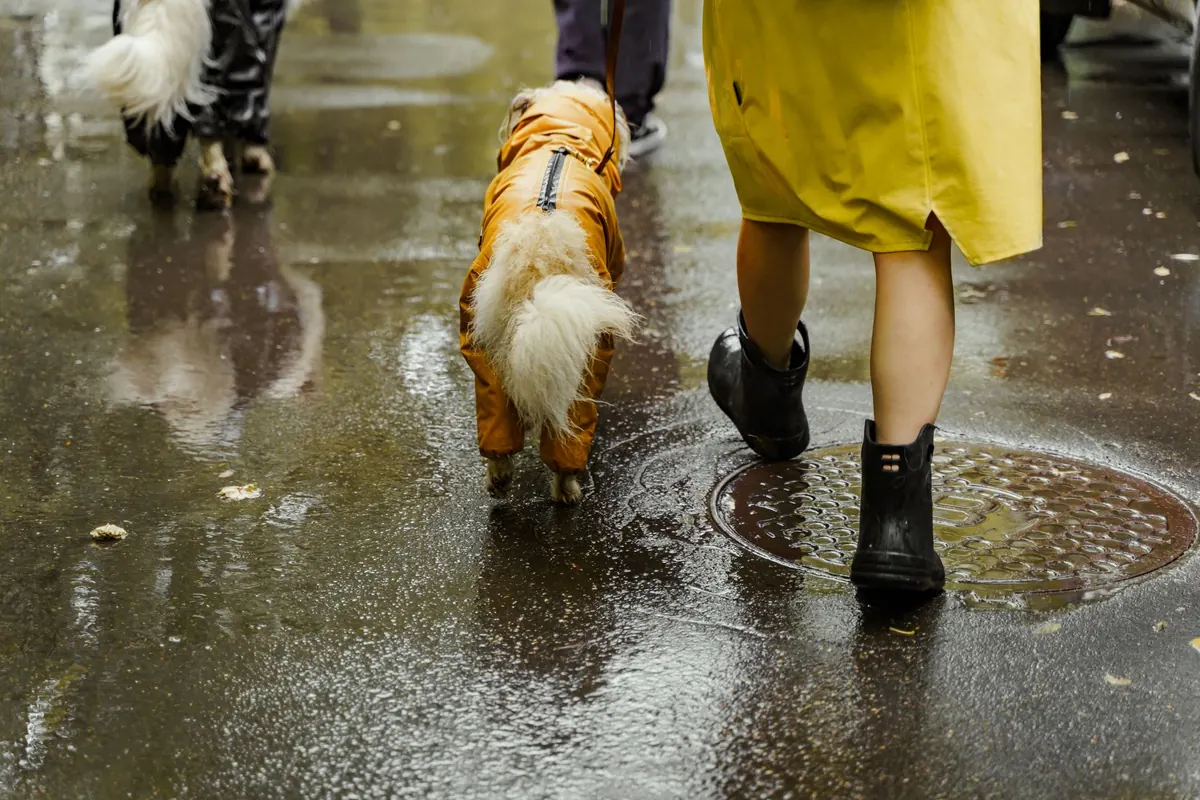
Photo: Yaroslav Shuraev / Pexels